Easing the human side
of the AI transition

The people part is harder than the code.

A ball of wool, half tangled and half neatly wound

The widespread adoption of AI has raised awareness of its technical side, but it also has a human side that's much more subtle. Traditional roles and teams change, and people stop trusting decisions. Those shifts slow you down much more than changing the way code is written does.

Our work with you is to surface the actual issues, both technical and human, and help move your team forward.

Let's talk

Where we come in

Which of these is happening on your team?

Open any card for how we'd handle it, and where we've done it before.

Resisting the AI rollout

Leadership reads it as obstruction. The engineers experience it as protecting the quality and standards they earned, and nobody has said either of these out loud.

Each week, both sides dig in a little harder.

How we'd handle it

We sit with the engineers and talk through the architecture and the decisions behind it, down to the implementation — being credible there is what earns the real conversation.

We lead the senior people to reveal what they're actually protecting: the standard they believe in. Then we bring that to leadership as a concern, and shape a rollout that keeps both the standard and the pace.

Where we've done this

Elbit Systems · Moria

I was the most junior person on the team when I pushed for a real shift in how we built software, a genuinely tough ask for engineers in real-time defense who'd been doing it their way for years. It worked.

Open as a page

Two camps over AI

Your team has adopted AI agents extensively, and this has created a split between those who believe that the results are good enough and others who think that a human should gatekeep the code. Even though everyone is using agents, there is no agreement on what the best way is to do so, and this is costing you more than the tools might save.

How we'd handle it

Adopting new technology raises the question of how far you can trust what it produces. We help you define what it is that a tool has to prove before you can rely on it, and where to draw the line between what can be trusted and what needs to be checked.

We bring input and feedback on what's working across the industry and what isn't, so that you can make the right decision for your organization.

Where we've done this

Sunbit · Gavrie

At Sunbit, I built a real-time platform on technology new to the team. Even though I got it to work, the backend team still said no, because they were the ones who would have to run it.

Redis · Gavrie

On a Rust rewrite at Redis, I put the component into production before asking anyone to decide. The team had something already running to judge, and they went with it.

Open as a page

See through the politics

Someone on the team isn't delivering, and you need to know why before you act. But everyone who can explain it has a position in it, and sometimes there's no manager in between at all. Guess wrong and you lose either the person or the team's confidence in you.

How we'd handle it

We get credible in the actual implementation first, which is what gets us taken seriously when we talk to the people. Then we give you the straight version: a skills gap, a breakdown in communication, or something structural that no one owns, and the concrete move it calls for. Sometimes that's a hire. More often it's something you can fix without one.

Where we've done this

Band · Gavrie

At Band, a company building infrastructure for AI agents, the CTO pulled me past the database-scaling work I'd come in for, into exactly this. What I told them ended in a hire.

Open as a page

Each team's own AI rules

Each group is sure their standards are better, and now AI agents are writing code inside every one of them.

How we'd handle it

We help you find the shared ground the disciplines can actually meet on: what needs to be common across the codebase, and what's fine to keep different. Then what it takes to get there: what you'd have to build, and what you can bring in. We get the teams to agree, and make it hold for both the engineers and the AI agents writing code.

Where we've done this

Line5 · Gavrie

At Line5, a physical-AI robotics company, I built exactly that kind of shared ground across several disciplines who could barely agree on what good code looked like.

Ultima · Gavrie

My time at Ultima Genomics, a DNA-sequencing startup, went as much on getting the engineers and the biologists onto a shared vocabulary as it did on writing code. I built a Rust bridge between their ML training tools, which took knowing both sides well enough to make them fit.

Open as a page

Experts outside the code

Your scientists, analysts, or clinicians hold the knowledge the product depends on. AI lets them write code now, and your engineers can tell the difference between code that runs and code that ships. Each side thinks the other is the holdup. Hiring more engineers moves the wrong number.

How we'd handle it

Both sides are half right, which is why the argument stays stuck. We're credible with the engineers on what production demands and with the experts on what they're trying to express, so the conversation moves.

From there we help you design the on-ramp: what your experts can own end to end, and what has to be in place before their work lands safely. Packaging the domain workflow as agent skills is one shape that works; the right one depends on your stack. We help you work out what those skills have to cover, then coach both sides until real commits are landing.

Where we've done this

AMR biotech startup · Gavrie

At an early-stage biotech predicting antibiotic resistance, I built the on-ramp and coached both sides until the scientists were shipping code themselves.

Open as a page

Roles lag behind AI

The roles have gone unclear, and everyone's guessing. People need to know where they stand. Without it, they don't wait around to find out.

How we'd handle it

We've held teams together through changes that couldn't wait for the org chart to catch up. We work with leadership on where the roles are actually going, and with the people on what that means for them: concretely enough that the ones you need can see a place worth staying for.

Where we've done this

Enigma · Moria

At Enigma, a fast-moving startup, roles kept shifting. As team lead over three sub-teams, I built a process that gave everyone a shared goal, and open conversations built trust across very different disciplines. That gave people real stability amid constant change.

Redis · Moria

Redis scaled hard, and roles moved with it. I took over a team that had gone silent and rebuilt it over video calls, without ever meeting them in person. They ended up measuring themselves by what they shipped together. The people we needed stayed.

Open as a page

Early bet, or wrong bet?

You made a real bet on AI: tools, rewrites, workflows, agents. Now it's stuck. Half the team says push through, the other half says pull back, and both have evidence. The call you actually need is the one nobody inside the argument can make: is this hard because it's early, or hard because it's wrong?

How we'd handle it

We've carried bets like this from both seats, the one placing the bet and the one living with it. By getting into the work itself, we can separate the friction that's immaturity from the friction that's mismatch, and give you a straight call. Sometimes that's doubling down. Other times it's reshaping the bet, or knowing when to fold.

Where we've done this

Redis · Gavrie

At Redis I bet on Rust years before it was widespread, to modernize aging components. This became the precedent the company drew on when it wanted to rebuild its cluster manager.

Enigma · Moria

Enigma's core engine moved off C++ onto Rust while the language itself was still unstable, so shipping on it was the bet. I carried that decision far enough into the code to bring the team with me, writing the macro layer and the WebAssembly work myself.

IBM · Moria

I spent years at IBM on the Rhapsody Action Language, a bet that had to keep working inside a product customers were already shipping. Month one gave no proof it would pay off. It shipped, and it is still in the field.

Open as a page

The wrong argument

Two organizations are now one on paper. In practice, each side kept its own definition of 'done': different things count as quality, different work gets rewarded. The Kafka argument isn't about Kafka.

How we'd handle it

We work with both sides to understand what each actually means by good work, before anyone reopens the technical argument. Then we name what's actually driving the disagreement, in terms both sides recognize, and help you settle on a standard both sides can work from.

Where we've done this

IBM · Gavrie & Moria

We overlapped at IBM, a company big enough to be two. One of us straddled the research and product sides of formal methods, where 'done' meant a published paper on one side and a shipped fix on the other. That meant translating one side's definition of done into the other's, and back.

Open as a page

About us

Trust we've already tested

We're Philipson Abadi, a partnership built on shared judgment and decisions made together. Each of us has spent 25+ years building and leading engineering teams across areas as diverse as distributed systems, machine learning, storage, embedded software, and bioinformatics.

We've led teams through this and similar transitions before, and this past year we've been in the code ourselves, with the same AI agents your engineers are using.

More about us
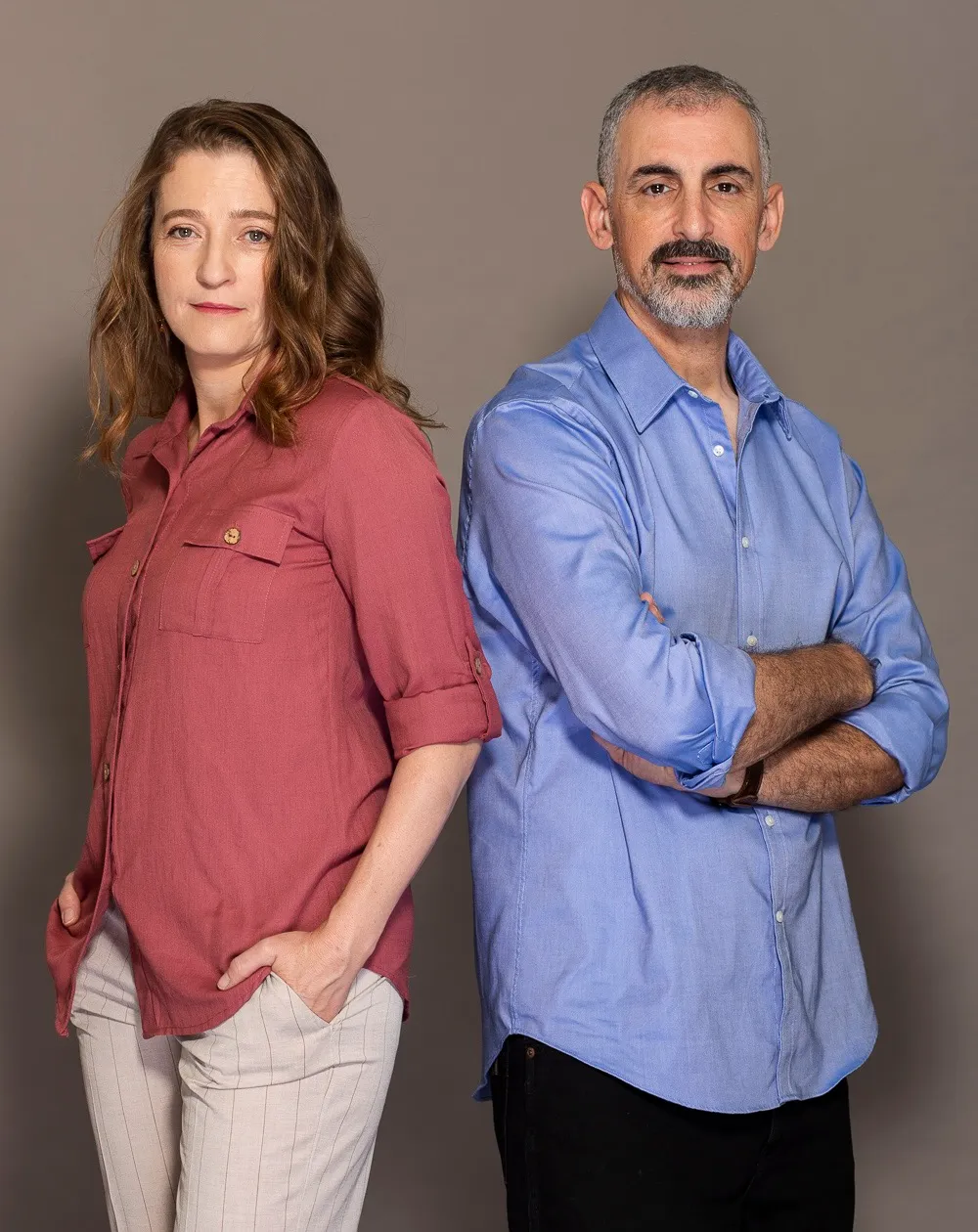
Moria Abadi and Gavrie Philipson

Companies

Decades inside the tech industry

  • IBM
  • Redis
  • Ultima Genomics
  • Elbit Systems
  • Sunbit
  • Line5
  • Band
  • Airobotics
  • Elastifile
  • ICAP
  • Expand Networks
  • Enigma MPC
The stories behind these logos

Our approach

Both halves of the problem

We bring two important and complementary capabilities to the same conversation: technical credibility and organizational insight. We listen to your people and name what's actually going on. What you're buying is our judgment in the room, working the problem with you in real time.

Read more

Services

Ways to work together

Contact

Let's talk

By submitting, you agree we may use these details to reply to you. See our privacy notice.

Prefer another way to reach us?